
Seed Planter Guide: 10 Smart Tips for Better Seed Placement
Introduction
The Seed Planter Guide preparation is the first step towards a uniform, high yield crop. Hand sowing can create rows of uneven seedling spacing, seed waste and hours spent thinning overcrowding. With a seed planter it is a quick, consistent, reliable process.
From a home vegetable garden to a diverse market garden to a small farm, precise planting of seeds can affect the germination success, root growth and final harvest. This guide covers all aspects of planting equipment setup, operation and maintenance to ensure good crop growth.
What Is a Seed Planter?
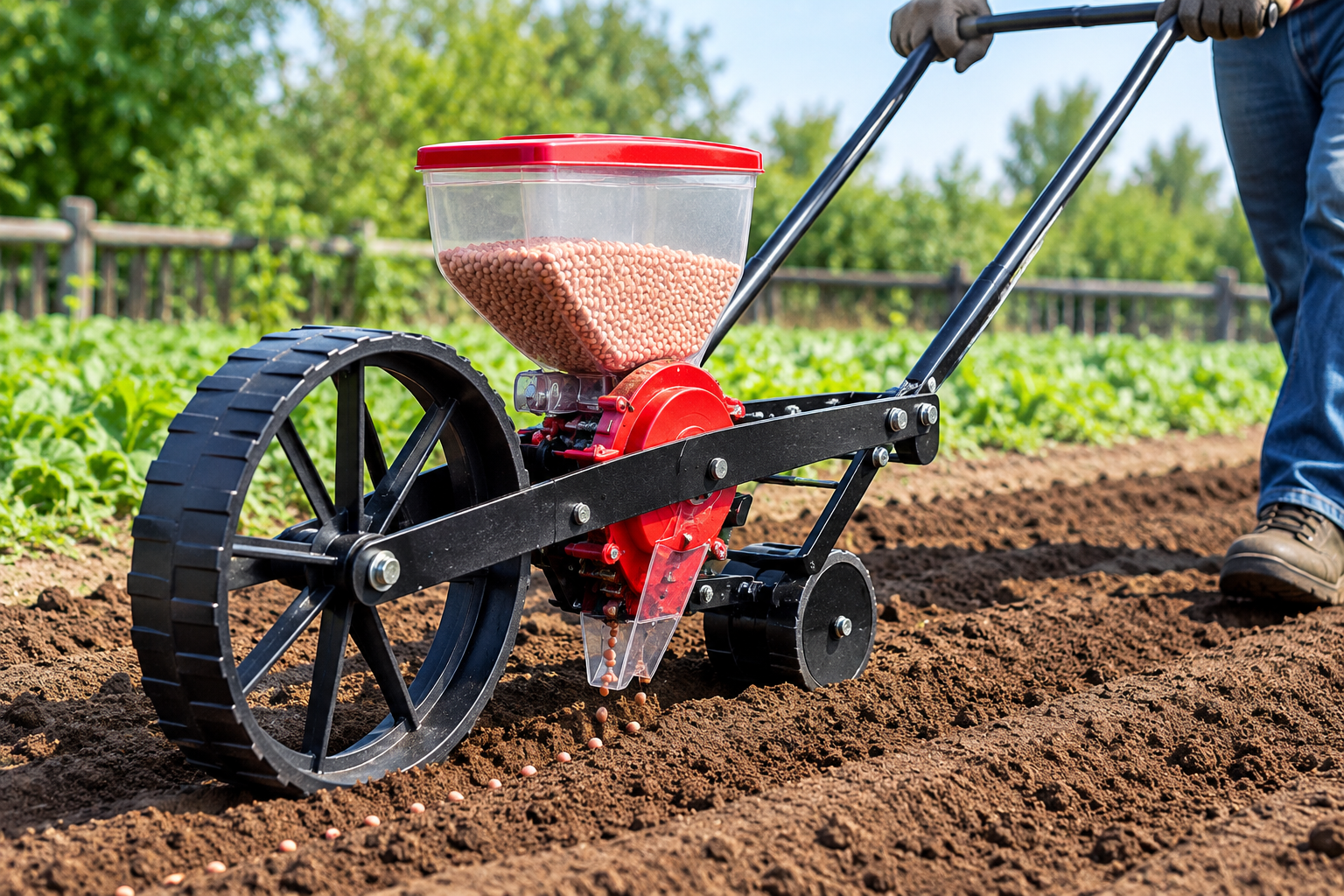
A seed planter is a planting machine that is specifically engineered to plant seeds at equal space intervals. A planting implement consisting of a hopper for holding the seeds, a press wheel at the back for compacting the soil surface, and a furrow opening mechanism for creating a shallow furrow, meters the seed out of the seed hopper, drops it at a precise location and covers the seed with soil.
The range of these tools vary in size and design:
- Handheld and Walk-Behind Seeders: Suitable for raised beds, home gardens and market farms.
- The Multi-Row and Precision Seeders are made for larger acreages, or for tractors or two-wheel walk-behind tractors.
- Mechanical Agricultural Seed Planters: Machines used for planting field crops such as corn, beans, and grains.
The goal of any seed planter machine is to plant seeds with consistency and efficiency while requiring little or no manual effort – regardless of the machine’s size.
Why Proper Seed Placement Matters
The production of consistent seed planting is not only for the purpose of making the rows look orderly, but is a fundamental rule of the art of farming. An important rule of success get a seedling in right place:
- Uniform Planting Depth: Seeds planted deeper use up energy stored in seed before reaches surface. Those that are planted too shallow may dry out, or be washed away during heavy rains.
- Seed Spacing: Uniform Seed Spacing eliminates crowding which provides a balanced amount of sunlight, moisture and soil nutrients for each plant, without excessive competition.
- Good soil to seed contact: Shaping soil around seed will help to facilitate penetration of moisture, accelerate rate of germination enhance overall emergence.
Seed Planter Guide: 10 Smart Tips for Better Seed Placement
Knowing to use your equipment more than just filling up the hopper walking down the row. Here are 10 simple advice for the best performance from your planting setup.
1. Choose the Right Seed Planter
Select equipment for plot size and crop varieties. Push seeders that have only a single row work well in loose, cultivated garden beds. However, for hard or untilled ground or multi-acre fields, a heavier duty agricultural seed planter is needed. Using the right tool avoids mechanical strain and even furrowing.
2. Check Seed Size and Shape
There are a multitude of seed sizes, ranging from fine seeds like brassica to irregular sweet corn and large beans. A large number of planters use interchangeable seed plates or calibrated roller cups.
- Always use raw seeds with the seed plate with the same diameter.
- Use pelleted seeds—use a disc that fits the pellet size and not the size of the seed.
3. Set the Correct Planting Depth
The basic guideline for planting seeds sow two three times width. At the point of precision planting, adjust the depth shoe/furrow opener to the desired crop. Use real soil depth measurements, not just measurements taken from the reference marks on the machine frame.
4. Adjust Seed Spacing Carefully
Before filling the planter’s hopper, make sure to check the ratio of gears, belt pulleys or disc holes. The proper seed spacing helps eliminate seed waste and provides you with less work to thin seedlings later in the season. Space may vary according to variety and plant size.
5. Prepare the Soil Properly
It is best to use a well-prepared, friable soil when planting seedlings. Thick weed debris, heavy surface crusts and big dirt clods can get caught in the furrow opener, and drag the surface instead of turning the drive wheel. Remove any large particles or weed debris and smooth the seed bed before seeding.
6. Check the Seed Metering System
Check the inside of the hopper to be sure that the seed brush or inside baffle is in place. As a brush wears down, multiple seeds can drop simultaneously and as the disc misaligns, it can cause cracks and/or pinching of the delicate seeds before they reach the discharge tube.
7. Maintain a Steady Planting Speed
Avoid rushing. The planter bounces when the speed of walking or driving is too fast, resulting in shallow furrows, dropping out of the planter and seeds are grouped together. Drive smoothly and maintain steady pace for keeping drive wheels on ground and metering mechanism turning evenly.
8. Inspect the Planter Before Use
Make a simple mechanical inspection before going into garden or field:
- Check drive chains, belts gears to ensure correctly tensioned.
- Make sure there no webs, dust or dry soil seed discharge tube.
- Check that the packing wheel on the back is free to rotate and that it is in line with the furrow opener.
9. Test the Planter Before Covering a Large Area
Test a small section of the bed or a flat, hard surface before you plant the whole area. Expose a few feet of the furrow to check planting depth and count the distance between dropped seed. Make final adjustments prior to filling hopper for full production.
10. Clean and Maintain the Seed Planter
Rust and moving part sticking occurs due to the residual dust from the seeds, fertilizer residue, and wet soil. Clean out seed hopper and furrow opener immediately after use if any seeds are left over, and brush out the hopper. Prior to storing, lubricate metal chains pivot points a light protective oil.
Common Seed Planter Mistakes to Avoid
Even the most experienced growers deal seed placement problems. Be on the lookout for these typical pitfalls:
- Sowing into Overly Wet Soil: Mud cakes on the drive wheels and depth shoes, lifting the unit out of the ground, clogging seed drop tubes.
- Filling Small Hoppers: If the hopper is filled to capacity, seed bridging may occur, resulting in a stop in seed flow.
- Tire or Wheel Slippage: If the drive wheel gets stuck on mud or loose sand the metering plate will not turn, resulting in long gaps in your rows.
- Not Storing the Plates Correctly: Warps, cracks or sun damage to plastic seed plates will cause irregular numbers of seeds to be dropped and misfed.
Conclusion
An accurate seed planter will eliminate the guesswork when it comes to seed sowing and ensure your crops have a head start for even germination and high crop yields.
Your seed investment is safe and your hours in the field are saved by preparing your soil, matching your plates to seed sizes, maintaining a steady operating speed and keeping your equipment clean. Set your adjustments for each planting session – your crops will thank you for it throughout the season.
FAQs
What is correct depth to plant seed planter a small garden for small garden seeds?
Small seeds like carrots, lettuce brassica should sown from 1/8 to 1/4 inch deep.
Will walk-behind seed planter accommodate pelleted seeds?
Yes, precision planters that are walk behind work well with pelleted seed. Pelleted seeds are uniform in size and may feed more reliably than raw, irregular seeds.
Why will my seed planter drop several seeds at a time?
If there multiple drops, seed plate hole is too large to fit size of the seed, internal seed metering brush worn, static electricity may be causing seeds to stick to each other hopper.
How to avoid seed drop tube clogging?
When the planter is on the ground, do not pull or roll the planter back as it will push dirt directly into the discharge tube.
Do I require special seed planters for small seed and large beans?
Not necessarily. A majority of multi-purpose planters are built to accept small and large seeds, have interchangeable seed discs, adjustable baffles, and openers with variable depths.
One Comment