
Hoe Tool Guide: 7 Essential Tips for Easier Gardening
Introduction
Hoe Tool Guide All gardeners are familiar with the saying that the right hand tool can make a hard task easier and faster. A nice hoe tool is one of the most valuable items to add to any garden shed. The right type of hoe and the correct way to use it can make a difference in the pleasure and productivity of gardening, whether it’s weed control, breaking up compacted soil or preparing neat rows for planting.
It takes you through the fundamentals of hoe tools and offers some practical advice so you can have the best performance in your own garden.
What Is a Hoe Tool?
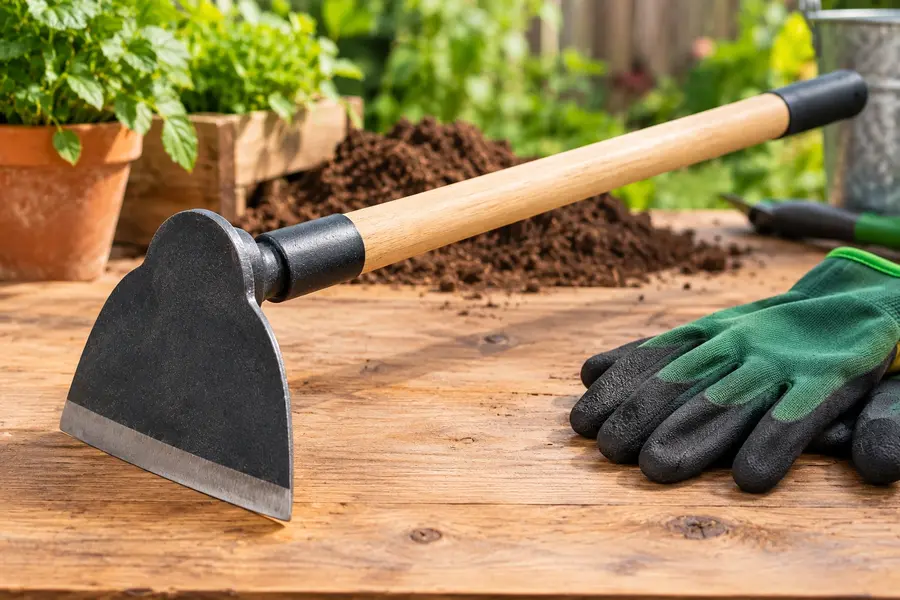
A hoe tool consists of a handle and a blade that is flat and angled. This basic approach has been used for gardening for many years and has proved to be very successful for many common gardening activities.
A hoe tool is used by most gardeners to loosen the top soil, break weeds at their roots, dig small furrows to plant seeds and to keep garden beds looking neat. Although it’s easy to make, some variations in blade shape and handle construction can make one hoe tool vastly superior to another in your garden.
Why Is a Hoe Tool Useful for Gardening?
A hoe is an all in one tool, that’s why it’s worth keeping in a garden shed. It has some of the most useful applications such as:
- Weed control – cutting weeds close to the ground, but not touching adjacent vegetation
- Soil tillage – the process of breaking up compacted soil to allow air, water and nutrients to reach plant roots
- Sowing seeds or transplantation to the beds followed by bed smoothing and leveling in the beds before planting.Smoothing and leveling the planting areas before sowing of seeds or transplantation.
- Ploughing or harrowing to make shallow furrows, or straight even rows for planting seed.
- Performing garden beds – clearing garden paths and borders of weeds all season long
Hoe Tool Guide: 7 Essential Tips for Easier Gardening
1. Choose the Right Hoe Type
There wide variety of hoe designs that perform a variety of tasks. A wide blade suitable for clearing large open space, but a narrow or pointed blade work best weeding between close plants. Before deciding on a style, consider you plan use your garden you want to do most.
2. Select a Comfortable Handle
The length of the handle will determine your posture and fatigue of your back and arms during a session. A long handle is usually more appropriate for standing work and minimizes bending, and a shorter handle for more control when weeding in detail. Consider comfort of grip, particularly for prolonged use.
3. Match the Blade to the Task
The shape and size of the blade will depend on the purpose for which you will use the hoe tool. A flat weeding blade is good for general weeding and surface cultivation, while an angled or pointed blade digs shallow rows more accurately. When the blade is used for what it was designed to do, then no effort is wasted.
4. Use the Correct Technique
Any hoe tool is more effective with good technique. The blade should stay on the surface of the soil, and push and pull the blade in short, controlled movements, instead of chopping too deeply. This method can accurately remove weeds without excessive soil disturbance.
5. Work With the Soil Condition
Hard and dry or too wet soil is less productive and is a nuisance to hoe. The blade will not cut in hard dry soil, and will stick in overly wet soil. For better results, you’re looking for a lightly moist soil that’s also easy to work, so try to work when the soil is in those conditions.
6. Keep the Hoe Tool Clean and Sharp
Take away plant debris and dirt from blade after use and allow to dry completely before storing. Clean sharp edges allow you to cut weeds and soil more readily, making it easier for you.
7. Store the Hoe Properly
Keeping your hoe tool in a dry and protected area will help prevent rust and damage. It can also be stored on a wall rack or off damp ground which means the next time you need to use it, it is ready.
Common Hoe Tool Mistakes to Avoid
A few common mistakes can be made by even the most seasoned gardeners:
- Failure to use the correct hoe for the job to be done
- Operating too deep in soil, disturbing roots of plants
- Using too much power rather than technique.
- Hoeing when the soil is too wet, or too compacted
- Failure to maintain the cutting edges until the blades are dull.
- Keeping the tool in moist or exposed environment
How to Choose the Best Hoe Tool
- When buying a garden hoe, you should take into account the following practical considerations:
- The size of the garden – wider blades could be advantageous for larger gardens
- Blade type – heavier clay soils may require a stronger blade
- The design may be used in different ways depending on the gardening tasks – weeding, cultivating or row-making.
- The shape and edge sharpness of the blades have been found to influence the performance.
- Longer handles improve comfort and posture.Handle length – affect comfort and posture.
- Handle material – wood, fiberglass or metal, each have their unique feel and durability to them.
- The term “well-balanced” means a tool that has been made as light as possible with the right amount of weight to minimize fatigue.
Conclusion
One of the easiest and most useful tools to have in your garden is a solid hoe. You can use the right hoe, an ergonomic handle, the right hoe for the job and hoe correctly and make gardening much easier. Include a habit of keeping your hoe tool clean, sharp and well maintained and you’re prepared for all future gardening seasons.
FAQs
- What is main purpose of hoe tool?
A hoe tool mainly used for weeding, loosening soil, preparing planting rows garden beds.
- Which hoe tool best for vegetable garden?
It depends on your tasks flat blades suit general weeding, while narrower blades work well between closely spaced vegetable rows.
- Can a hoe tool help with soil preparation before planting?
Yes, hoe tool commonly used to break up compacted soil smooth beds before sowing seeds transplanting.
- How often should I sharpen my hoe tool?
This depends on often you use, but checking blade regularly sharpening feels dull helps maintain performance.
- What’s best way to store hoe tool between uses?
Clean dry blade, then store dry area away from moisture to prevent rust handle damage.
2 Comments