Garden Hoe Guide: 6 Types Every Gardener Should Know
A good garden hoe remains one of the most efficient weeding tools available, cutting through unwanted growth just below the soil surface without the back strain of pulling weeds by hand. With several distinct hoe designs on the market, picking the right one makes a real difference in how effective, and how comfortable, your weeding sessions actually are.
This guide breaks down the main garden hoe types, when each one shines, and what to look for before adding one to your gardening toolkit.
Table of Contents
- Why Hoeing Works So Well for Weed Control
- Common Garden Hoe Types
- Choosing the Right Hoe for Your Garden
- Getting the Most From Your Garden Hoe
Why Hoeing Works So Well for Weed Control
Hoeing removes weeds by slicing through their roots just beneath the soil surface, rather than pulling the entire plant out by hand. This approach disrupts the weed’s ability to regrow while disturbing the surrounding soil far less than digging.
According to University of Florida IFAS Extension, a small hoe works well for detailed weeding in flower beds, while a traditional, larger hoe is better suited to clearing weeds across bigger garden areas efficiently.
Timing matters as much as technique. Hoeing works best when weeds are still small and the soil is slightly dry, since this makes it easier to cut through roots cleanly without excessive soil disruption.
Common Garden Hoe Types
Not all hoes are built for the same job, and the differences between designs are more significant than they might first appear.
- Stirrup hoe (hula hoe), with an oscillating, stirrup-shaped blade that cuts weeds on both the push and pull stroke, making it efficient for larger open areas.
- Scuffle hoe, a flat, sharp-edged blade designed to skim just beneath the soil surface, ideal for precise work between closely spaced plants.
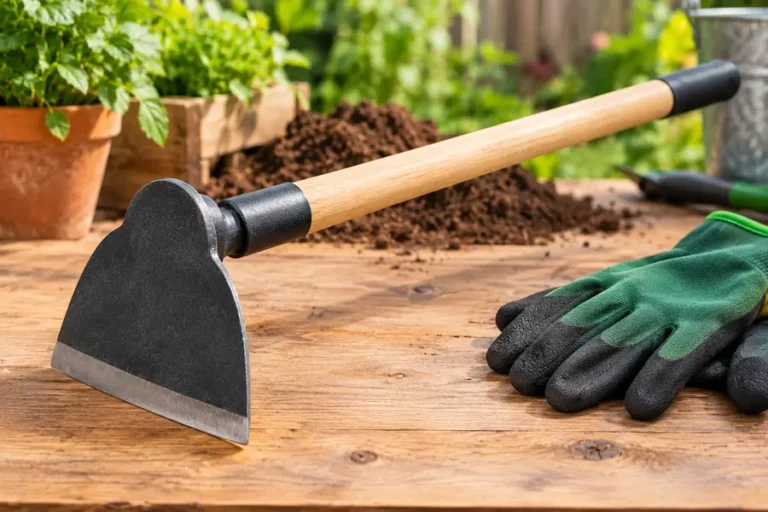
- Draw hoe (standard garden hoe), with a flat blade angled for chopping and dragging soil, useful for both weeding and light cultivation.
- Dutch hoe, a push-style hoe with a flat blade held nearly parallel to the ground, well suited to harder, compacted soil.
- Warren hoe, featuring a pointed, heart-shaped blade useful for creating furrows and precise planting rows in addition to weeding.
- Collinear hoe, with a narrow, razor-sharp blade designed for shallow, precise cuts close to delicate plants.
Many home gardeners find that a stirrup hoe and a scuffle hoe together cover the vast majority of everyday weeding needs.
Choosing the Right Garden Hoe for Your Space
A few practical factors help narrow down which hoe type best fits your specific garden.
Consider:
- Garden size. Larger vegetable plots or open beds benefit from a stirrup hoe’s efficient back-and-forth cutting action, while smaller spaces may only need a compact scuffle hoe.
- Plant spacing. Tightly spaced plants call for a precise tool like a scuffle or collinear hoe to avoid accidentally damaging nearby stems and roots.
- Soil type. Harder, more compacted soil often benefits from a Dutch hoe’s flat, push-style blade, while looser soil works well with most hoe types.
- Handle length and material. A longer handle reduces bending and back strain, which matters most for anyone spending extended time weeding.
If you’re setting up a broader gardening toolkit rather than just a single hoe, our garden tools collection covers complementary hand tools that pair well with regular hoeing.
Getting the Most From Your Garden Hoe
A few technique and maintenance habits help any garden hoe perform noticeably better over time.
- Hoe after light rain or watering, when the soil is slightly moist but not saturated, since this makes cutting through weed roots easier.
- Keep your hoe blade sharp, using a file or sharpening stone periodically to maintain a clean, efficient cutting edge.
- Hoe shallow, not deep. Cutting just below the surface is enough to disrupt weed roots without unnecessarily disturbing your garden soil.
- Clean and dry your hoe after each use, which prevents rust and extends the tool’s usable life significantly.
For more hands-on tips specifically focused on technique, our Hoe Tool Guide covers additional practical advice for getting the most out of your garden hoe.
Frequently Asked Questions
What’s the difference between a stirrup hoe and a scuffle hoe?
A stirrup hoe has an oscillating, stirrup-shaped blade that cuts on both push and pull strokes, while a scuffle hoe typically has a fixed, flat blade designed for precise, shallow cuts in tighter spaces.
Which garden hoe is best for a vegetable garden?
A stirrup hoe generally works well for larger vegetable plots thanks to its efficient cutting action, while a scuffle hoe suits tighter rows between individual plants.
How often should I sharpen my garden hoe?
This depends on frequency of use, but sharpening every few weeks during active gardening season, or whenever the blade feels noticeably dull, keeps hoeing efficient.
Is hoeing better than pulling weeds by hand?
Hoeing is generally faster for larger areas and puts less strain on your back, though hand-pulling can be more precise for removing entire root systems of stubborn, established weeds.
Can I use a garden hoe on any soil type?
Most hoe types work across various soil conditions, though a Dutch or draw hoe tends to perform better on harder, more compacted soil compared to lighter-weight designs.
Conclusion
Choosing the right garden hoe comes down to matching the blade design to your garden’s size, soil type, and plant spacing. A stirrup hoe and a scuffle hoe together cover most everyday weeding needs for the average home gardener, while more specialized types like the Dutch or collinear hoe suit specific conditions. With the right hoe and a bit of consistent technique, weeding becomes a far quicker, less exhausting part of garden maintenance.